BACKGROUND
How Chinese Migration Became Subject to Racial Restriction
EARLY BEGINNINGS
Chinese migration to California grew in the nineteenth century, especially through labor connected to the Gold Rush, railroad construction, agriculture, and urban work. Many Chinese migrants came from Guangdong and other parts of southern China, pushed by instability and economic hardship and pulled by the possibility of work abroad. But as anti-Chinese racism grew in California, Chinese workers were increasingly blamed for economic problems and treated as threats to white labor and citizenship.

THE LAW BEHIND THE ISLAND
The Chinese Exclusion Act of 1882 was the first major federal law to restrict immigration into the United States based on a specific ethnic or national group. It created a ten-year ban on Chinese laborers and prevented Chinese immigrants from becoming naturalized citizens. Later laws extended and deepened the exclusion system, meaning Chinese migrants had to prove they belonged to narrow exempt categories such as merchants, students, diplomats, ministers, or relatives of U.S. citizens.


FROM HONG KONG TO SAN FRANCISCO BAY
For some migrants, Hong Kong was a key port linking southern China to steamship routes across the Pacific. By the time Chinese migrants reached San Francisco Bay, they were already moving through a world of documentation, inspection, and racial suspicion. Thus, Angel Island was the final checkpoint in a larger system connecting village life, colonial port cities, steamship travel, U.S. immigration law, and family reunification across the Pacific.
A LOCAL SITE
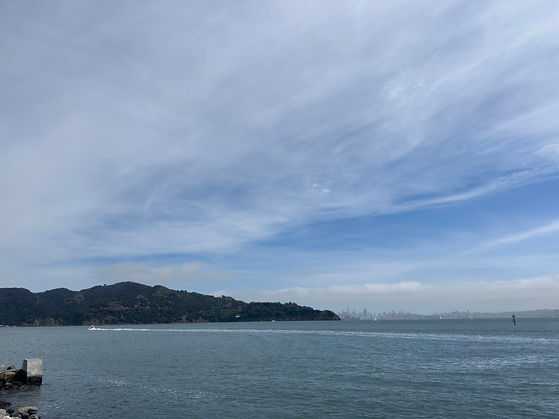
Angel Island matters because this history happened in California, inside San Francisco Bay. The site is close to San Francisco, Oakland, Berkeley, and other Bay Area communities shaped by Asian American migration. This makes the harm more visible locally, and visitors can still go to the island, enter the preserved barracks, and see the poems carved into the walls by detained immigrants.